AI-Assisted Building
AI is a great junior and a dangerous senior
AI is brilliant at the work of a talented junior and dangerous the moment you let it make senior decisions. Know which hat it’s wearing.

AI is brilliant at the work of a talented junior and dangerous the moment you let it make senior decisions. Know which hat it’s wearing.
I was moving fast one afternoon, AI in the loop, and it handed me an architecture decision so confidently written that I almost just took it. It read like a senior engineer’s recommendation. Clean reasoning, no hedging, the kind of answer you nod along to. I paused only because something in the trade-offs felt too tidy, too free of the usual costs. It was wrong in a way that would have surfaced months later, expensively, in production. The confidence had almost carried me past my own judgment.
That’s the whole risk in one moment. AI is a superb junior and a dangerous senior, and it never tells you which hat it’s wearing.
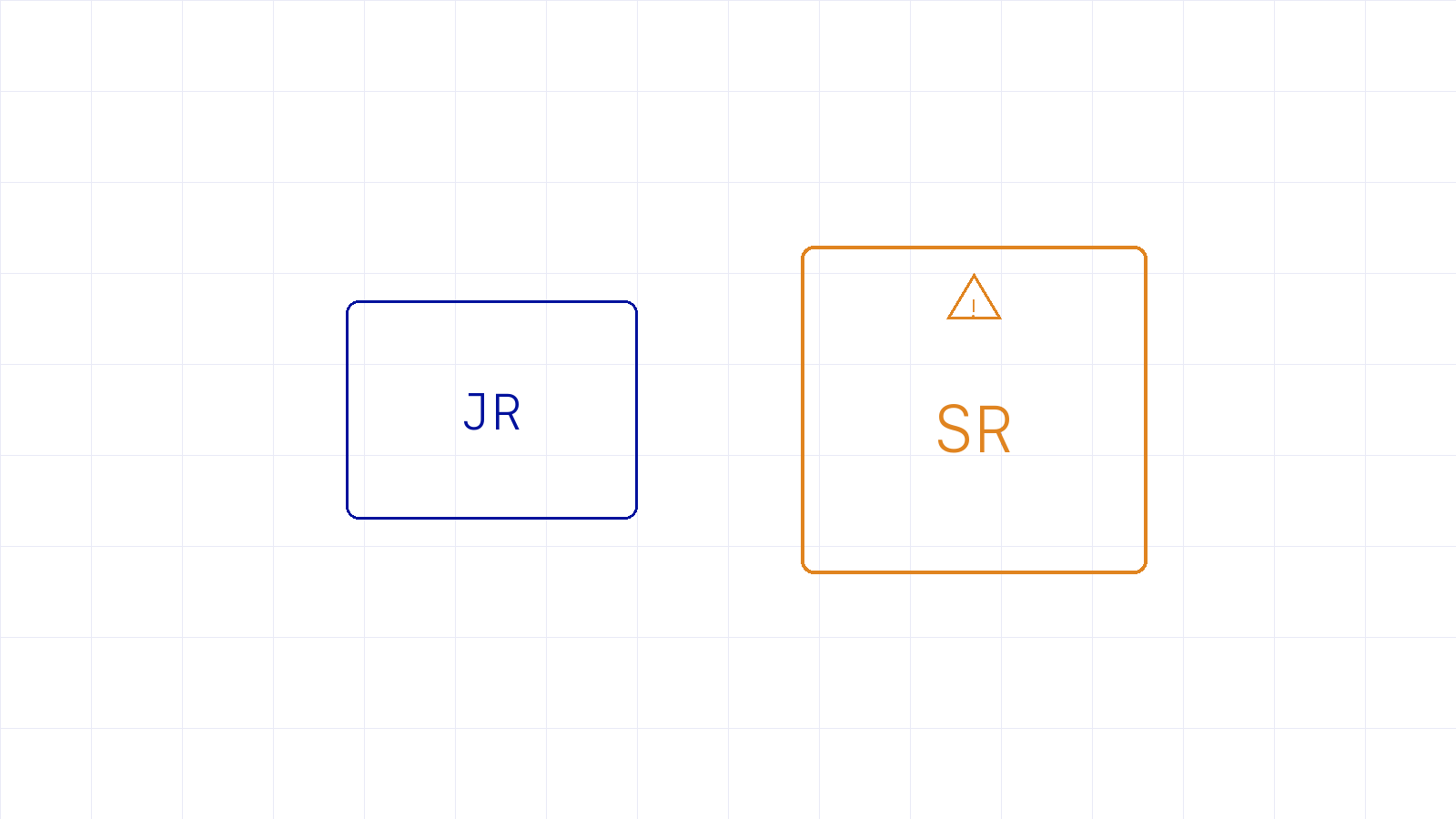
As a junior, AI is a gift. Give it a clear, bounded task and it executes fast, tirelessly, without ego or a bad day. Scaffold this component. Draft this migration. Translate this layout into clean markup. Explain this unfamiliar API so I can decide instead of guess. For that kind of work it’s the best junior I’ve ever worked with, and I hand it off freely. I wrote more about where that line sits in how I actually build with AI.
As a senior, though, the very thing that makes it useful becomes the thing that makes it risky. It’s just as fluent and confident when it’s wrong as when it’s right. A junior who is unsure sounds unsure. AI never does. It delivers a shaky guess and a solid recommendation in exactly the same steady voice.
Let AI do the work of your best junior. Never let it make the calls you would only trust a senior to make.
The practical defense is boringly simple: I treat every AI output as a proposal, never a verdict. On the junior tasks I skim and ship. On anything that touches architecture, data shape, or a client relationship, I slow down and ask the annoying question, is this actually right for this situation, or does it just read right? Half the time the answer is fine. The other half, that pause is the whole job. It’s the same discipline as writing a good brief, which is why the prompt is the new spec and clarity still does the heavy lifting.
The place this bites hardest is stack and platform decisions, where a confident wrong answer compounds for years. That’s exactly the kind of call I argued you should make yourself in the stack you choose is a bet on who maintains it.
Hand AI the junior work without guilt, it frees real hours. But keep the senior decisions on yourself: the architecture, the taste, the judgment calls, no matter how convincing the draft looks. The people who get burned are the ones who mistake fluency for seniority, and fluency has never been cheaper than it is now. Judgment is the part that’s still scarce, and it’s still the whole job.
This is roughly how the team and I work with AI at Dthree Digital, and a lot of what we talk through with clients trying to figure out where it fits in their own build. If that’s on your mind, I’m always glad to compare notes.
New writing on how the web actually gets built, plus the free pixel wallpaper pack when you subscribe.
Related reading
Tell me about your project. I read every message myself.
Get in touchBased in Manila, working with teams across time zones.