Opinion
Built for a screen we don’t have
Nolan made The Odyssey for a screen the Philippines doesn’t have. The craft still carried. Your website should pass the same test.
Nolan made The Odyssey for a screen the Philippines doesn’t have. The craft still carried. Your website should pass the same test.
Last Sunday I watched The Odyssey in a Manila cinema. Which means I did not watch the film Christopher Nolan made. Not exactly.
Nolan shot the whole thing on IMAX film cameras, the first narrative feature ever to do it. The full image, the tall 1.43:1 frame with all that detail, exists only on IMAX 70mm prints, and only a few dozen theaters in the world can run them. The Philippines has none. Not one screen in the country can show the version he actually made. What reached my seat was the digital cut: a tighter crop, a compressed image, a smaller room.
And it still worked.
Everything I responded to that afternoon survived the downgrade. The boat is a real boat; the cast learned to sail it. The Cyclops is puppetry, animatronics, and robotics before it is anything else. The light on the water is light on water. None of it needed the giant screen to land. The quality was baked into the work itself, and no amount of compression between his camera negative and my cinema seat could squeeze it out.
That is not luck. It is what happens when someone builds to the highest standard available and refuses shortcuts at the layer people actually feel. Nolan is not anti-technology; the man shoots on the most advanced cameras in existence. He is anti-shortcut in the places where a shortcut shows.
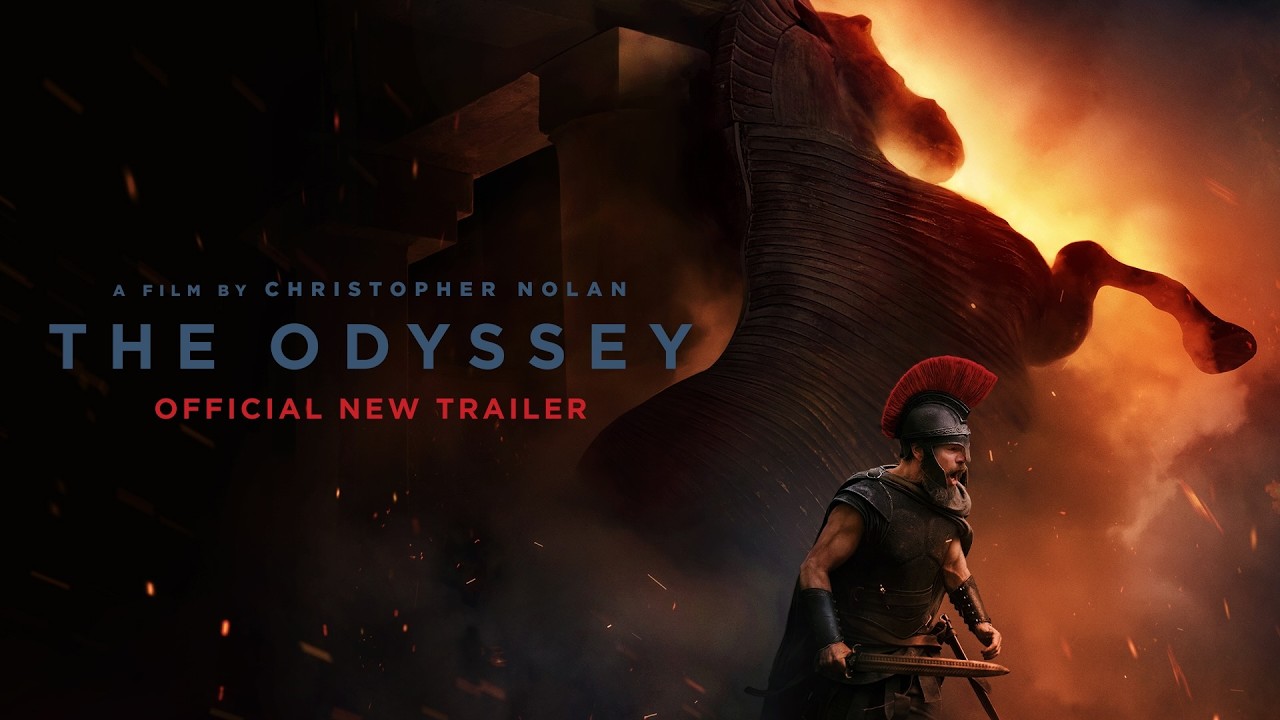
If you have not seen the film yet, the official trailer carries the scale in about ninety seconds, even on the screen you are holding.
Here is where this stops being a film story.
Almost every website is designed the way Nolan designed his film: on the best screen in the building. A wide, calibrated monitor. Fiber internet. The latest browser. And almost none of them are experienced that way. The audience is on a mid-range Android, on prepaid data, on a commute, in glare. Your work, like the film, is nearly always seen in a degraded format.
So the question that matters is the one The Odyssey just answered at scale: what survives compression?
Structure survives. If a site makes sense, it makes sense on a small cracked screen. Words survive. A clear sentence is clear at any resolution. Speed survives, or rather, its absence becomes the whole experience on a slow connection. And judgment survives: the decisions about what to leave out, which are invisible and carry everything.
What does not survive is the decorative layer. The parallax, the cursor effects, the loading animation you approved on a monitor that will never render for a single real customer.
Generation is cheap now. I build with AI daily, and I use it the way Nolan uses his cameras: the most capable tool available for the labor. The film is not less human for being shot on machines Homer could never imagine. It is human because every choice that reaches the audience passed through a person who knew why.
That is my answer for the web too. As human as the parts people touch. The words. The structure. The decision about what not to build. Those are judgments, not output, and audiences can tell the difference. It is the quiet lesson of a film that just posted the biggest global opening of Nolan’s career, around 264 million dollars, mostly on screens that could not show it properly. Craft is not a niche taste. It is the one thing that reliably survives the journey from your hands to theirs.
Build for the best screen, then check the worst. Borrow the cheapest phone in your household, stand outside at noon, and open your site on mobile data. Whatever is left when the conditions are against you is what you actually made. If it still carries, that was craft. If it does not, no launch-day monitor will save it.
I could not see Nolan’s real movie. There is not a screen in my country that can show it. I still walked out knowing exactly what he made. That is the standard.
New writing on how the web actually gets built, plus the free pixel wallpaper pack when you subscribe.
Related reading
Tell me about your project. I read every message myself.
Get in touchBased in Manila, working with teams across time zones.