Opinion
The client isn’t the user, and both are right
The person paying for the site and the person using it want different things. Good work holds both, without pretending they’re the same.

The person paying for the site and the person using it want different things. Good work holds both, without pretending they’re the same.
Early in a project there are always two people in the room, even when only one of them is physically there. The client, who is paying, who has a boss and a target and a strong opinion about the hero image. And the user, who isn’t in the room at all, who will never read the brief, who just wants to find one thing and leave without being annoyed.
They want different things. The whole craft is refusing to pretend they want the same thing, and refusing to simply obey whichever one is louder.
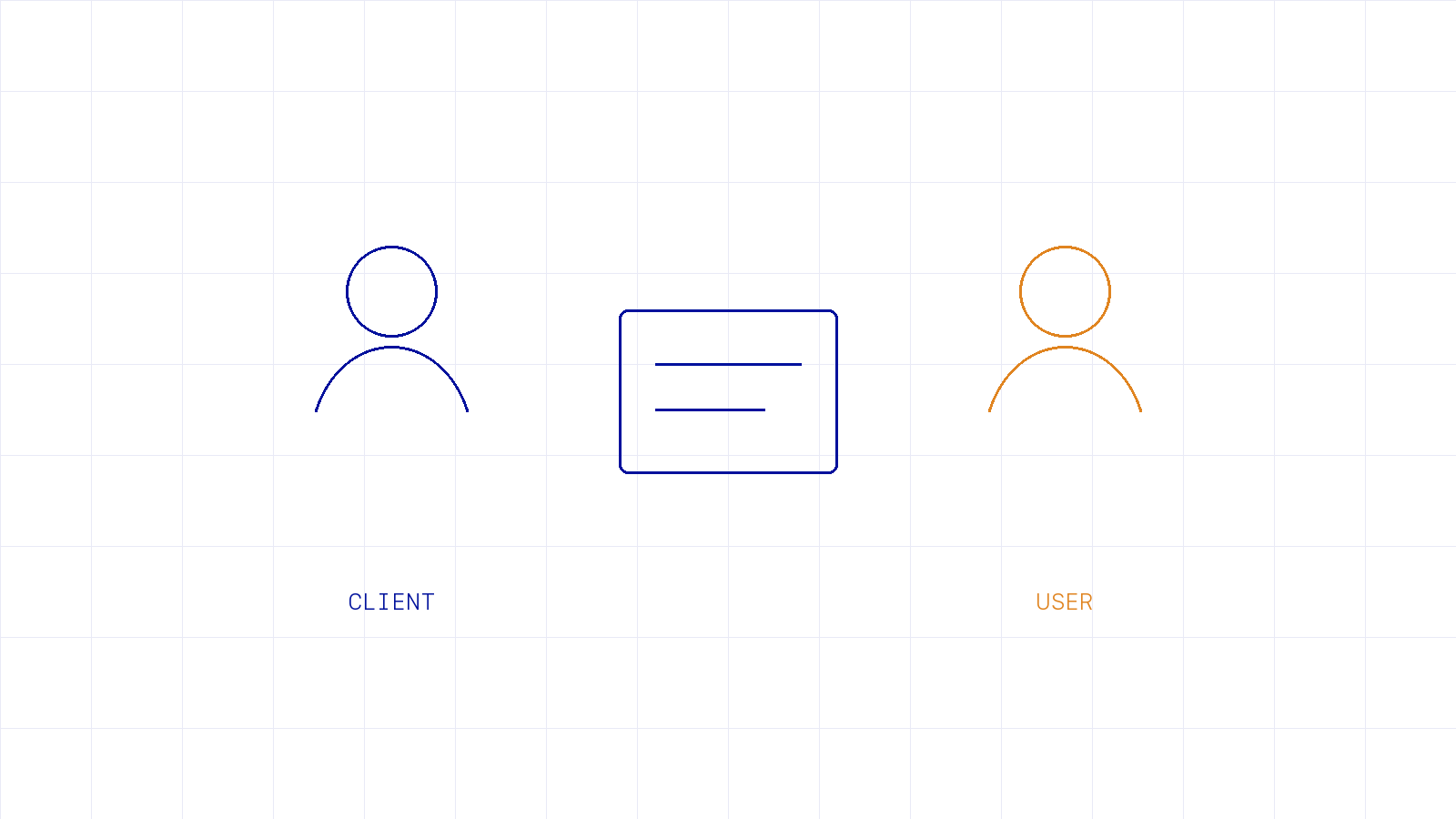
The client wants the site to reflect the brand, hit the number, and impress the board. That’s not vanity, it’s their job, and they’re right about the business it has to serve. The user wants to accomplish a task quickly and get on with their day. That’s not laziness, it’s every one of us on every site we didn’t build, and they’re right about the experience it has to be.
Serve only the client and you get a beautiful site nobody can use, all message and no path. Serve only the user and you get a frictionless site that quietly fails the business it was built for. The work lives in the tension, not on either side of it.
Design that serves only the person paying, or only the person using, has quietly failed the other one.
The move that keeps this healthy is saying the tension out loud instead of resolving it in secret. When a client asks for the thing that will hurt the user, I don’t just quietly override it, and I don’t just comply and blame them later. I name it: here’s what you want and why it’s reasonable, here’s what it does to the person trying to use this, and here’s a third option that serves your goal by serving them. That conversation is uncomfortable for about ten seconds and then it’s the most valuable part of the whole engagement.
The World Vision sponsorship work in my project archive lived entirely in this tension: pages that had to convert visitors into sponsors while honoring the dignity of the children. Serve only the conversion goal and it becomes manipulative. Serve only the sensitivity and it converts nobody. The answer was neither, it was the honest middle.
Keep both people in the room the whole way through. When their wants collide, resist the two easy exits, blindly taking the order because someone is paying, or quietly overriding it because you know better. Name the tension, and find the answer that serves the business by serving the person it’s for. That negotiation isn’t a distraction from the work. It’s most of the work. It’s close cousin to how scope creep is really a communication failure, and to why design systems die in the handoff: almost every project problem is really a conversation that didn’t happen early enough.
New writing on how the web actually gets built, plus the free pixel wallpaper pack when you subscribe.
Related reading
Tell me about your project. I read every message myself.
Get in touchBased in Manila, working with teams across time zones.